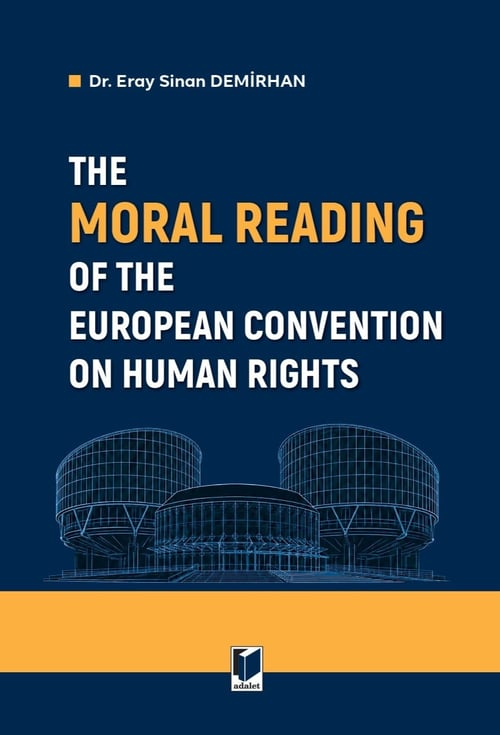
The Moral Reading of the European Convention on Human Rights
Kitabın Açıklaması
The protection of human rights in the twenty-first century faces a profound paradox: while the universal language of dignity and equality is more pervasive than ever, the judicial mechanisms designed to uphold these values are often caught between the pressures of political majorities and the search for objective moral truth. The European Convention on Human Rights is frequently described as the most effective system of international human rights protection in existence. Central to this effectiveness is the European Court of Human Rights, an institution tasked with interpreting the Convention’s abstract moral clauses -such as the right to ‘private life’ or ‘freedom of expression’ -in the context of modern societal challenges. However, the Court’s jurisprudence often oscillates between two primary interpretive strategies: the search for a ‘European consensus’ based on shared state practices, and an evolutive ‘moral reading’ that seeks the objective moral truth underlying the Convention rights.
This book is the culmination of research that began as a doctoral inquiry into the interpretive soul of the European Convention on Human Rights (ECHR). At its heart, it explores a fundamental question: Should the European Court of Human Rights (ECtHR) act as a mere mirror of the common practices of member states, or as a principled guardian of the moral values that underpin human dignity? By employing the legal interpretivism of Ronald Dworkin -specifically his ‘moral reading’ of constitutions and his theory of ‘rights as trumps’ -this work seeks to provide a coherent framework for understanding the Court’s reasoning in its most difficult and sensitive cases.
- Açıklama
Kitabın Açıklaması
The protection of human rights in the twenty-first century faces a profound paradox: while the universal language of dignity and equality is more pervasive than ever, the judicial mechanisms designed to uphold these values are often caught between the pressures of political majorities and the search for objective moral truth. The European Convention on Human Rights is frequently described as the most effective system of international human rights protection in existence. Central to this effectiveness is the European Court of Human Rights, an institution tasked with interpreting the Convention’s abstract moral clauses -such as the right to ‘private life’ or ‘freedom of expression’ -in the context of modern societal challenges. However, the Court’s jurisprudence often oscillates between two primary interpretive strategies: the search for a ‘European consensus’ based on shared state practices, and an evolutive ‘moral reading’ that seeks the objective moral truth underlying the Convention rights.
This book is the culmination of research that began as a doctoral inquiry into the interpretive soul of the European Convention on Human Rights (ECHR). At its heart, it explores a fundamental question: Should the European Court of Human Rights (ECtHR) act as a mere mirror of the common practices of member states, or as a principled guardian of the moral values that underpin human dignity? By employing the legal interpretivism of Ronald Dworkin -specifically his ‘moral reading’ of constitutions and his theory of ‘rights as trumps’ -this work seeks to provide a coherent framework for understanding the Court’s reasoning in its most difficult and sensitive cases.Stok Kodu:9786253778934Boyut:16x24Sayfa Sayısı:186Basım Yeri:AnkaraBasım Tarihi:2026 Mayıs
- Taksit Seçenekleri
- Axess KartlarTaksit SayısıTaksit tutarıGenel ToplamTek Çekim436,10436,102218,05436,103145,37436,10Ziraat BankkartTaksit SayısıTaksit tutarıGenel ToplamTek Çekim436,10436,102218,05436,103145,37436,10Maximum KartlarTaksit SayısıTaksit tutarıGenel ToplamTek Çekim436,10436,102218,05436,103145,37436,10Vakıfbank KartlarıTaksit SayısıTaksit tutarıGenel ToplamTek Çekim436,10436,102218,05436,103--Diğer KartlarTaksit SayısıTaksit tutarıGenel ToplamTek Çekim436,10436,102--3--
- Yorumlar
- Yorum yazBu kitabı henüz kimse eleştirmemiş.
-
%11Yeni
 3.100,00TL 2.759,00TL
 -
%11Yeni
-
%11Yeni
-
%11Yeni
-
%11Yeni
-
%11Yeni
-
%11Yeni
-
%11
-
%11